
How to Integrating Traditional Feng Shui Principles into Modern Office Environments?
Feng Shui, an ancient Chinese practice that aims to create harmony between people and their environment, has been gaining popularity in modern office design. The principles of Feng Shui can enhance not only the aesthetic appeal of a space but also its functionality, well-being, and productivity. In this blog post, we’ll explore how traditional Feng Shui principles can be applied to modern office environments, offering both foundational concepts and practical tips for creating a balanced and positive workspace.
Core Feng Shui Layout Principles for Offices
1. The Three Cycles and Nine Periods Orientation三元ä¹è¿ (2024-2043: Entering the Lower Cycle Nine Period)
Feng Shui follows a cyclical system of energy shifts, and understanding the upcoming cycle is essential for aligning your office space with positive energy.
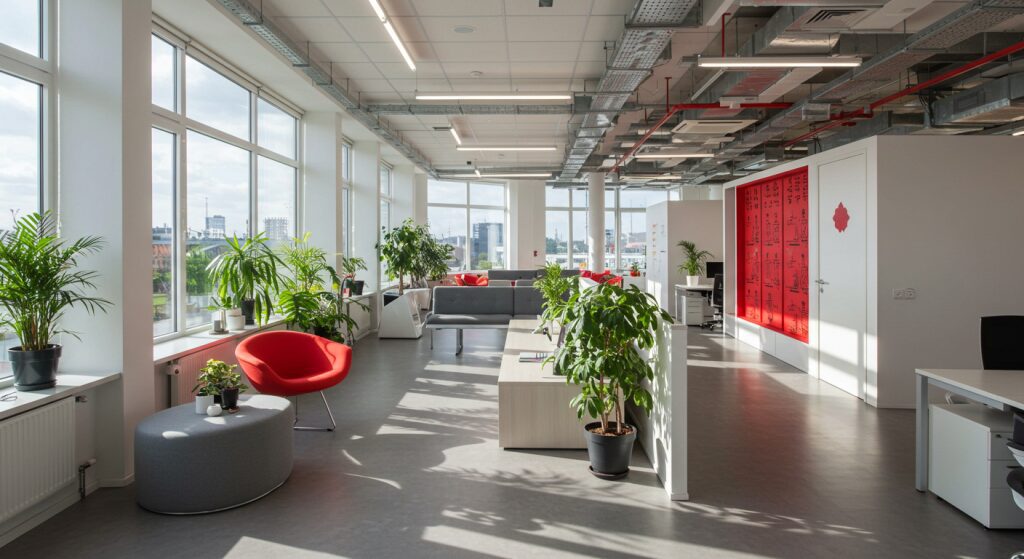
Nine Purple Star (Right Assistant Star): Dominating energy from 2024 to 2043, this star represents creativity, leadership, and growth. In the next 20 years, focus on the Southeast area of your office by adding red elements. This is the ideal space for a conference area or creative zone where brainstorming and collaboration take place.
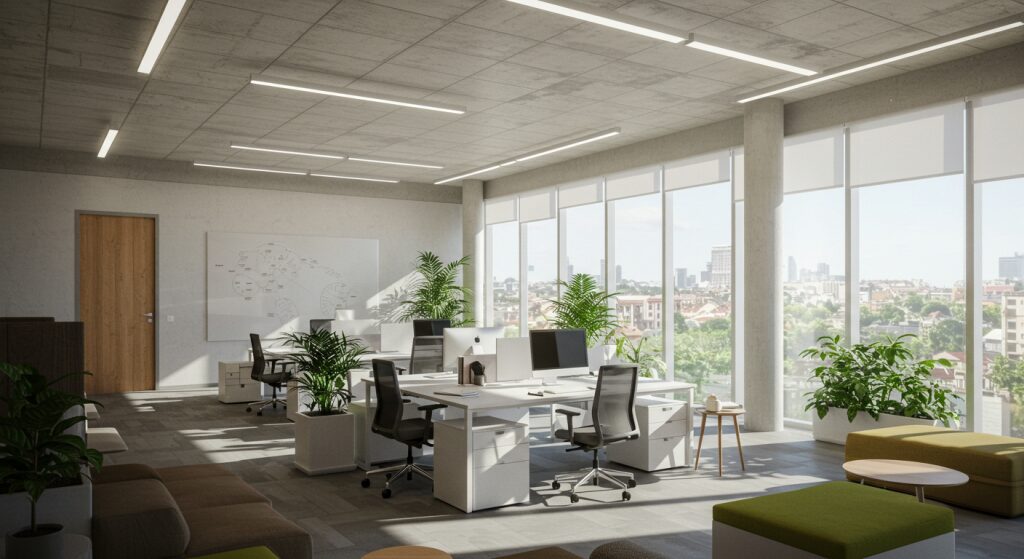
西北方å…白æ¦æ›²æ˜Ÿï¼ˆè´µäººä½) Northwest Six White Star (Military Star): This star represents benefactors, mentors, and leadership. Keep the Northwest area clean and organized. You may want to consider adding metal filing cabinets to reinforce leadership authority.
2. Dynamic Qi Mouth Law
Qi, or energy, flows throughout your office, and proper alignment ensures the flow remains positive.
The director or manager’s office door should not directly face the employee area. It’s best to create a zigzag flow with partitions to guide the Qi and reduce unnecessary tension.
Finance offices should be placed in the Southwest (Kun Position). Keep the safe against a solid wall and avoid placing it near a window to prevent wealth from “leaking.â€
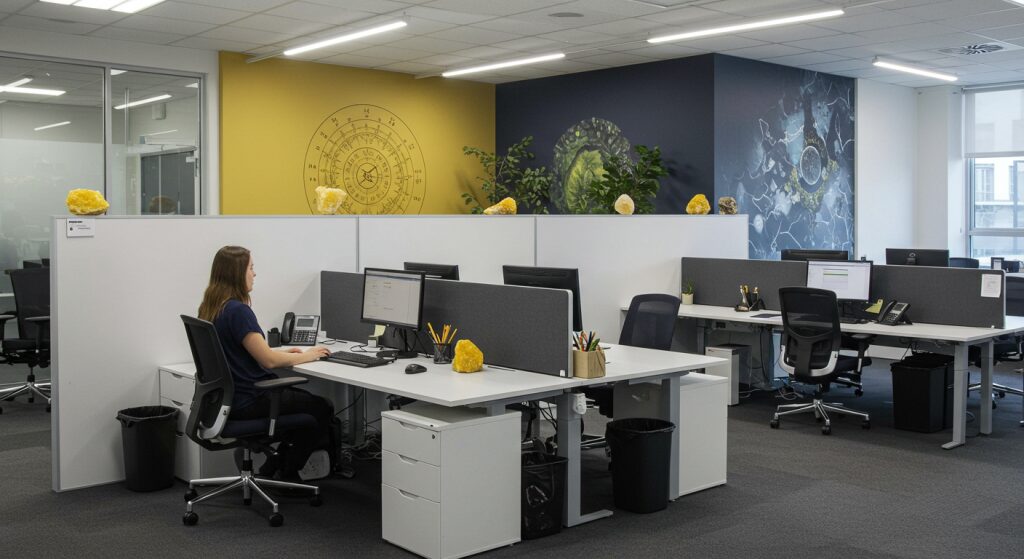
Feng Shui for Executive Offices
1. Positioning for Decision-Makers
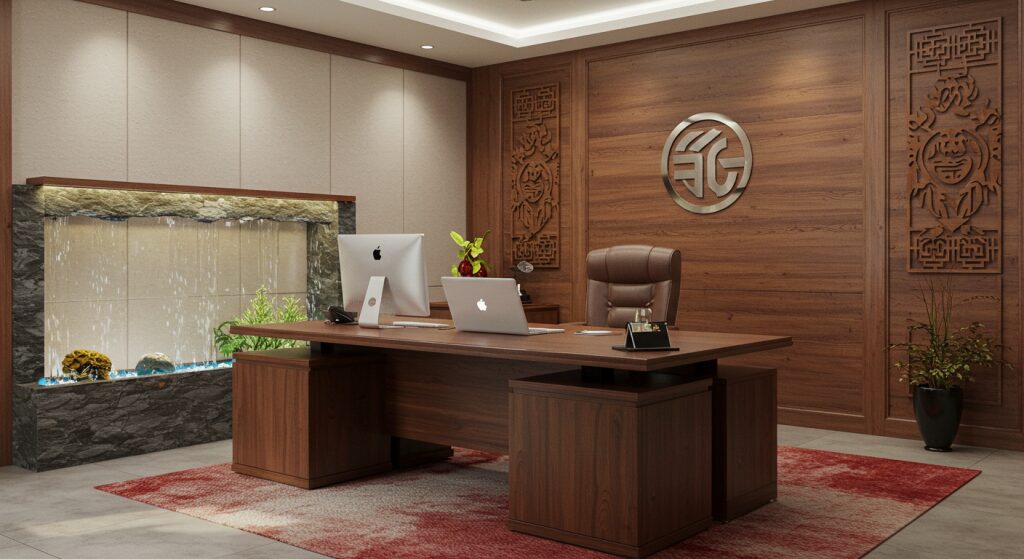
Chairman/CEO’s Office: The ideal location for top executives is in the Northwest (Qian Position) of the office floor. This placement aligns the individual with the influence of leadership. Use the “Dragon Side/Tiger Side”layout for the desk:
Tiger Side (right side facing the door): This side should remain low and static, featuring items such as heavy books or solid artifacts.
Dragon Side (left side facing the door): Best suited for dynamic water elements like fountains to promote movement and fluidity.
2. Management Taboos
- Back to the Window: Avoid positioning your desk where your back faces a window. If this is unavoidable, consider installing a solid wood backing panel for protection and stability.
- Mirrored Bookshelves: Avoid using mirrored surfaces for bookshelves, as they can reflect energy negatively. Instead, opt for open-shelved, dark walnut furniture with an odd number of shelves to enhance energy flow.
Optimizing Modern Office Spaces
1. Workstation Energy Matrix
Different teams benefit from different energy sources, so it’s essential to strategically place workstations according to Feng Shui.
R&D Team: The North (Kan Position) is ideal for research and development spaces. Use dark blue mouse pads and silver stationery to balance the intellect and creativity required in these areas.


Sales Team: Place them in the East (Zhen Position) for increased vitality and communication energy. Yellow citrine crystals can enhance their work area, promoting better communication and relationship-building.
2. Feng Shui for Technology Equipment
The modern office’s reliance on technology demands special consideration in Feng Shui.
- Server Room: Avoid placing the server room in the center of the office. A green plant wall can serve as an excellent barrier, protecting against electromagnetic field (EMF) radiation.
- Fire-related Equipment: Printers and heating systems should be placed in the South (Li Position), paired with obsidian ornaments to balance their fiery energy.
Resolving Layout Issues with Feng Shui
1. Improving Through-the-Hall Sha (Bad Chi) Issues
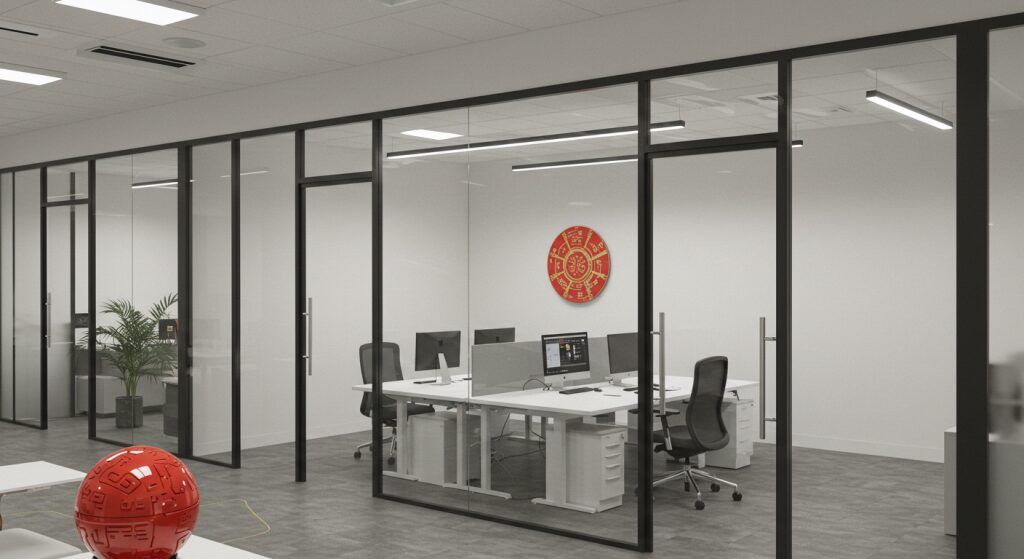
If there’s a direct path through your office space that causes Qi to rush through too quickly, it’s known as “Sha.†Here’s how to remedy it:
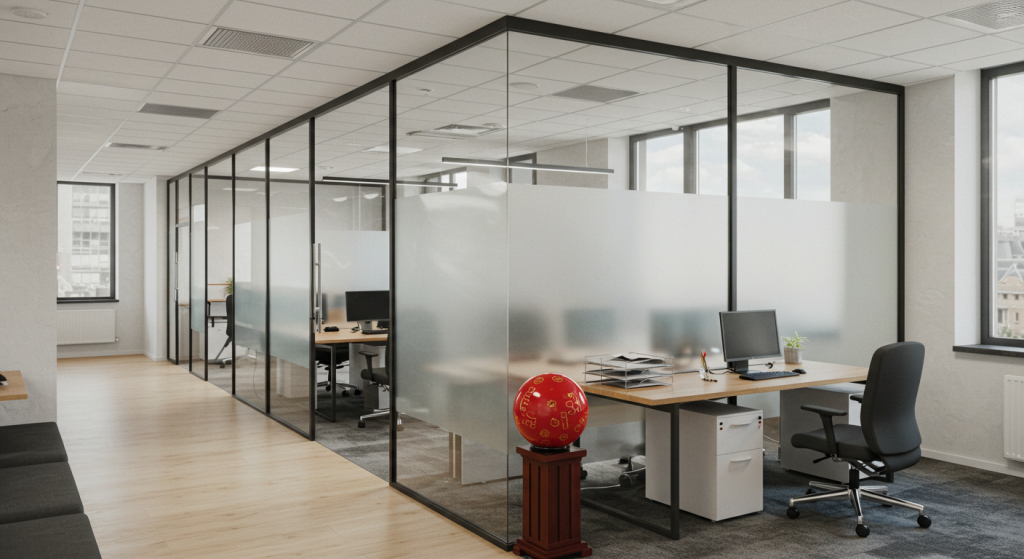
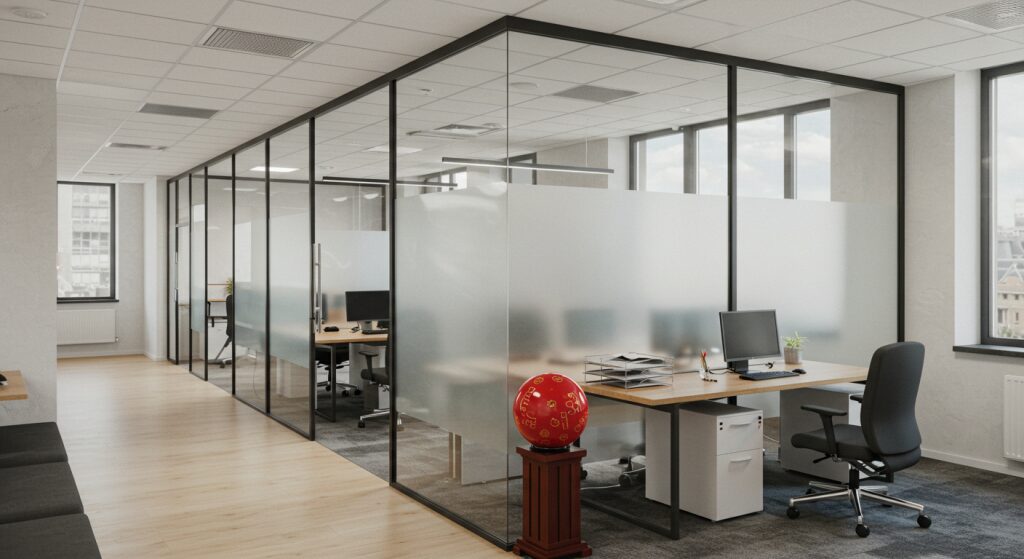
Use smart dimming glass partitions to create separation while maintaining natural light and softening the direct flow.
- A 360-degree rotating Feng Shui ball can be strategically placed at intersections to stimulate Qi circulation.
2. Dealing with Overhead Beams
Exposed overhead beams are a common Feng Shui concern, often thought to cause mental stress or “Sha.†Combat this by:
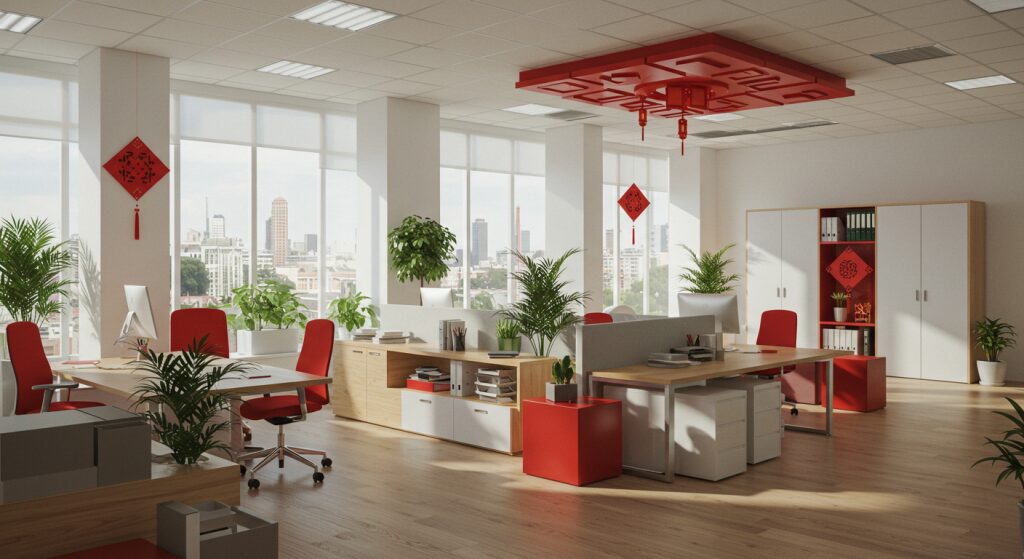
Installing streamlined LED light strips embedded in the beams for a modern and soft effect that mitigates the Sha.
Hang a Nine Palace Eight Trigram copper plate above workstations to bring balance, incorporating modern art for visual appeal.
Enhancing Space-Time Energy
Feng Shui doesn’t only address the physical elements of your office—it also considers the flow of energy over time.
1. Solar Term Layout Method
- During the Spring Equinox, place a Wen Chang Pagoda in the Southeast and pair it with an aroma diffuserusing pine essential oil to stimulate intellectual growth.
- In the Winter Solstice, arrange a salt lamp array in the North to enhance wealth accumulation and promote positive energy for the end of the year.
2. Numerical Feng Shui Applications
- Incorporating numerology, ensure that your Wi-Fi password includes the numbers 3 and 4, which are favorable as they represent the wood-fire generating cycle.
- Select auspicious hours for important meetings, such as 9-11 AM (Si Hour) or 3-5 PM (Shen Hour).
Modern Considerations in Feng Shui for home Office Environments
1. Feng Shui for Remote Work and Hybrid Models
In the era of hybrid and remote work, applying Feng Shui to your home office has never been more important. Key principles include:
Designate a “work zone†within your home to maintain boundaries between work and personal life. This ensures your workspace supports focus and productivity while reducing distractions.
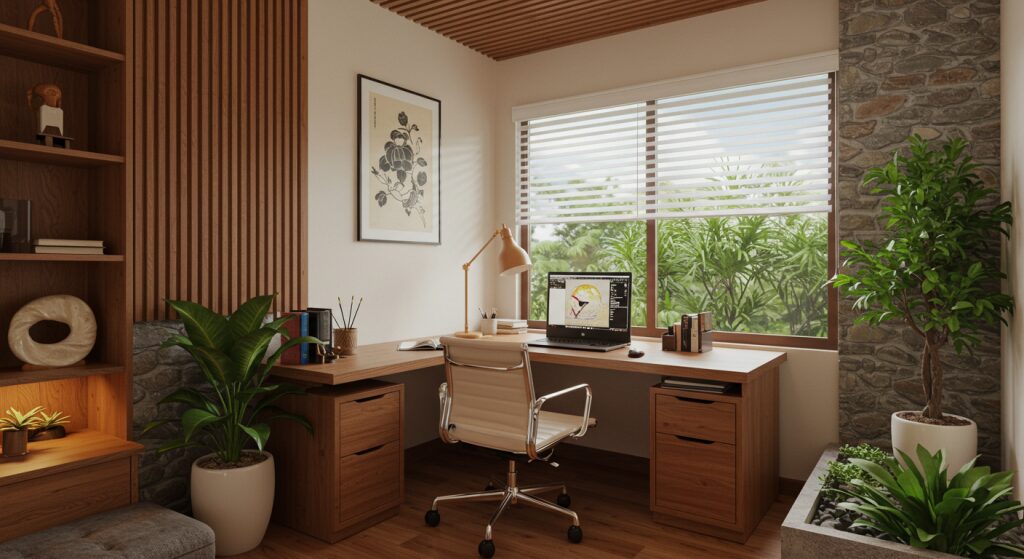
Use natural light and indoor plants to maintain energy flow in your home office, ensuring a refreshing and motivating environment.
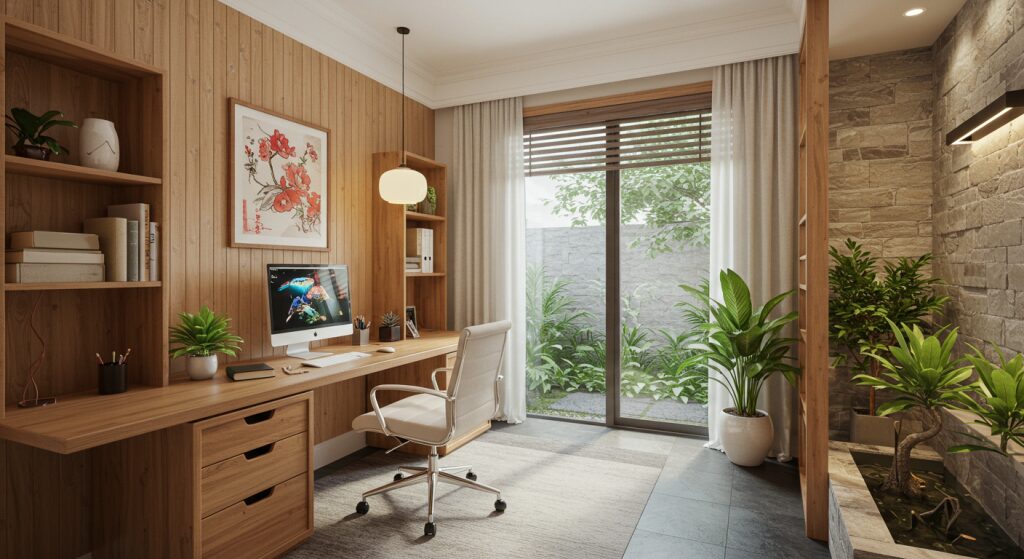
2. Integrating Biophilic Design with Feng Shui
Biophilic design focuses on incorporating natural elements into the built environment, enhancing well-being and productivity. This aligns perfectly with Feng Shui principles:
3. Air Quality and EMF Mitigation
In today’s tech-heavy world, air quality and EMF exposure are critical considerations. Here are ways to mitigate negative effects:
Air-purifying plants, such as spider plants and snake plants, help improve air quality in your office.
Use grounded outlets and keep devices at a safe distance to reduce the harmful effects of EMFs.
The practice of Feng Shui offers a holistic approach to office design that supports both individual well-being and organizational success. Whether you’re designing a traditional office space or a modern hybrid setup, integrating Feng Shui principles can enhance productivity, collaboration, and energy flow. Remember, a balanced environment is key to fostering creativity, communication, and leadership in the workplace.
By implementing Feng Shui in your office, you can create a space that supports positive energy and fosters success for everyone involved.
Expert Tip: Keep your Feng Shui adjustments updated quarterly, and don’t forget to perform an aura calibration during the Beginning of Spring (Li Chun) to maintain a continuous flow of good energy.
If you need fengshui assistance , please contact Fengshui Master Elly for a free consultation, at 619-800-2468.


 English